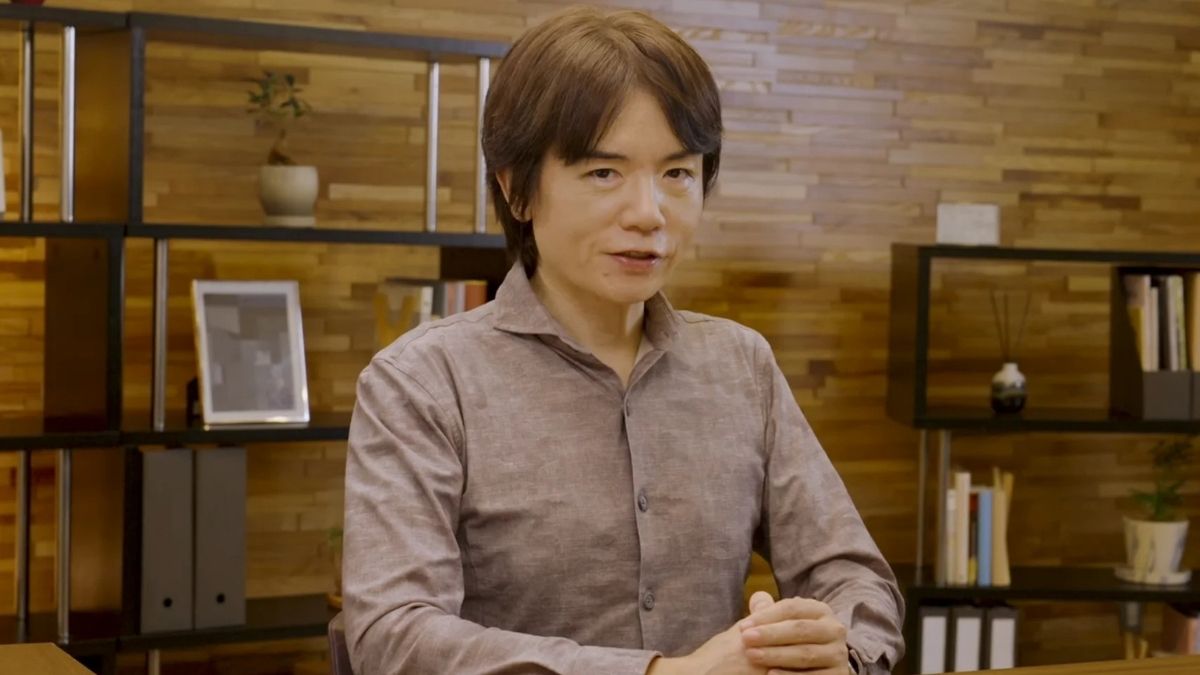
Renowned game developer Masahiro Sakurai, known for his work on Super Smash Bros. and Kirby, has voiced strong concerns about the growing use of AI in game development. In a recent interview, Sakurai warned that AI could lead to a surge in unoriginal and unprofitable games, diluting the creativity that has long defined the industry.
The Originality Dilemma
Sakurai argues that creating truly original games requires developers to take risks and come up with ideas that players may not even realize they want. He cites Super Smash Bros. as an example, noting that if it had followed the conventional rules of fighting games, it might never have been released or succeeded. AI, he fears, could exacerbate the challenge of originality by making it easier to produce games that merely replicate existing formulas.
The Flood of Games
The game designer points to the exponential growth of game releases on platforms like Steam, where the number of annual releases has skyrocketed from 275 in 2010 to over 19,000 today. Sakurai predicts that AI will further accelerate this trend, leading to a market saturated with games that lack originality and fail to resonate with players. As one commenter put it, 'The signal-to-noise ratio is going to be so fucking bad that it's going to be hard for anyone to find those original games.'
AI as a Double-Edged Sword
While some see AI as a tool that could democratize game development, allowing more people to bring their ideas to life, others worry about the quality of the resulting games. 'AI can only make varied copies of things it was trained on,' one commenter noted, echoing Sakurai's concern that AI-generated games will lack the creativity and uniqueness that human developers bring. Another observer added, 'AI is a useful tool, but a potentially destructive one for many. It smooths everything over so much that you’re just taking a potential filet mignon of an idea and making Big Macs instead.'
The Future of Game Development
Despite the concerns, some remain optimistic about AI's potential to enhance game development. 'The barrier for getting great ideas to interactable content that can be distributed worldwide just got flattened by A LOT,' one commenter argued, suggesting that AI could usher in a golden era of gaming. However, Sakurai's warning serves as a reminder that originality and creativity remain the cornerstones of successful games, and AI's role in preserving these qualities is far from certain.
As the debate over AI in game development continues, Sakurai's perspective highlights the need for a balanced approach—one that leverages AI's capabilities without sacrificing the human touch that has made gaming such a vibrant and innovative medium.

