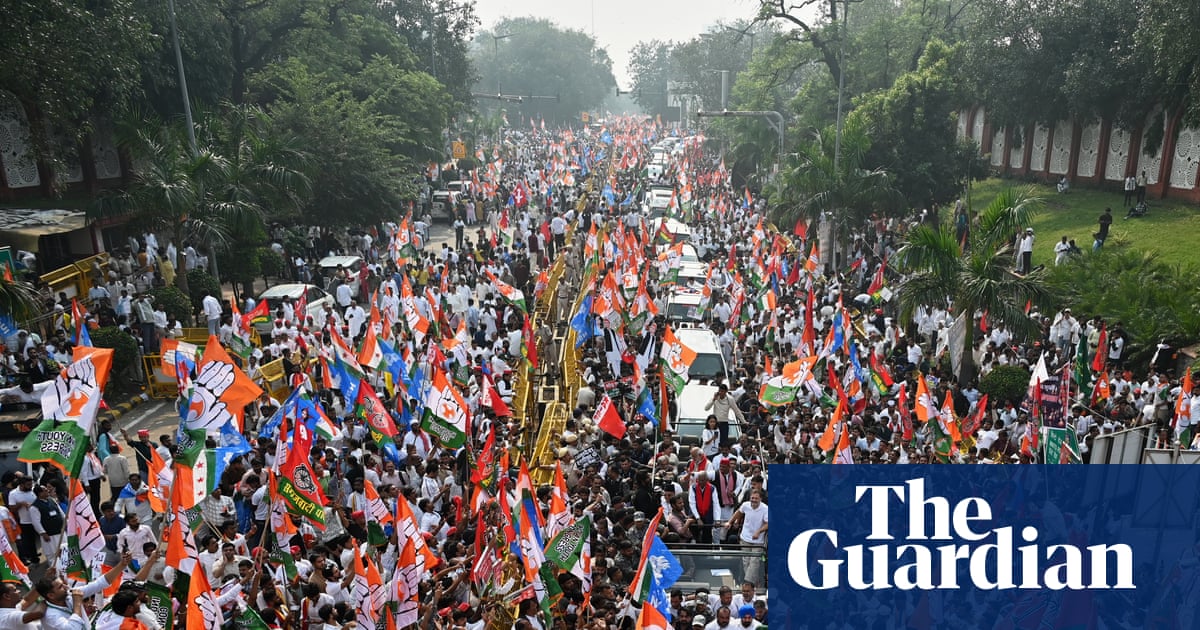
A surging wave of political tension reached a high-water mark in India’s capital this past weekend, where tens of thousands of demonstrators assembled to protest the government's administration of the country's voting system. Organized under a central unifying slogan—'Vote Bachao, Desh Bachao,' or 'Save Votes, Save the Country'—the gathering brought together a broad coalition of political organizers, concerned citizens, and opposition figures alarmed by recent changes to the national voter registry.
At the heart of the dispute is the Special Intensive Revision (SIR), a sweeping government-led process aimed at updating the country's voter lists. The initiative has faced intense scrutiny following reports that approximately 130 million names have been removed from the official rolls. Opposition leaders argue that the procedure disproportionately targets minority groups and lower-income communities, handing the ruling Bharatiya Janata Party (BJP) a calculated structural advantage ahead of upcoming electoral contests. Allegations of procedural flaws and friction within the Election Commission have escalated into calls for the immediate resignation and impeachment of Chief Election Commissioner Gyanesh Kumar.
Addressing the crowd, prominent opposition leader Rahul Gandhi launched a fierce critique of the administration, asserting that officials had committed an unacceptable overreach by compromising the democratic process. Leaders from the opposition bloc—known by the acronym INDIA (Indian National Developmental Inclusive Alliance)—framed the protest as a fundamental defense of constitutional rights, warning that they would not stand by as democratic protections were weakened.
Dissecting the Numbers and the Motives
Despite the fiery rhetoric from the stage, the event highlighted the complicated realities of modern political organizing in India. Organizer predictions of a million-person turnout gave way to an assembly that, while substantial at tens of thousands, left noticeable stretches of empty space in the main arena. Local authorities established police barricades along major access routes into Delhi, which opposition organizers claimed prevented hundreds of transport buses from reaching the city.
For many of those present, participation had little to do with traditional party loyalty. Independent citizens voiced frustration with what they perceive as a shrinking space for public dissent and an increasingly heavy-handed administration. Others, however, expressed skepticism toward the establishment opposition's ability to present a cohesive alternative, viewing the demonstration as an attempt to leverage genuine public frustration without addressing deeper organizational shortcomings.
Government representatives and ruling party leaders swiftly dismissed the rally, framing the demonstration not as a defense of public rights, but as an attempt to create instability. BJP officials rejected claims of voter suppression, arguing that the voter roll revision is a routine, transparent administrative effort designed to purge duplicate entries and update official records fairly.
The Public Debate: Accountability vs. Political Strategy
Beyond the speeches and official statements, the protest has triggered intense debate over the nature of political dissent and democratic health in the country. Many observers point out that robust public demonstrations are a long-standing feature of the political landscape, emphasizing the necessity of questioning government authority.
"Go out on the street, protest. Fight against corruption, fight against displacement, fight to save your basic human rights, fight to criticize government, protest for right to vote, fight for jobs, then fight for high paying jobs, fight for clean water, fight for better education and healthcare, fight for answers, fight for accountability. Fight against injustice. Go out on the street, and do peaceful protest. It's your right.🌻"
Conversely, critics of the demonstration question whether mass rallies without definitive legal action are effective. Some commentators contend that without presenting concrete evidence of wrongdoing in a court of law, high-profile political demonstrations risk looking more like electoral posturing than a substantive legal challenge.
"I genuinely think the opposition has a much better chance of challenging the current government if it focuses on governance, accountability and presenting a credible alternative rather than just trying to discredit the government"
A Divided Political Horizon
This latest mobilization takes place alongside a wider backdrop of grassroots activity, including independent youth-led movements that have gained traction over recent months. While establishment parties attempt to channel this widespread public energy into organized political momentum, a persistent gap remains between political party structures and broader, non-aligned protest movements.
As the fallout from the voter roll revision continues to unfold, the controversy highlights the fundamental tension shaping the national discourse: a governing party confident in its electoral mandate versus a fragmented opposition seeking to mobilize public anxiety over the future of democratic institutions.

